The Aircraft
Consolidated B-24 Liberator
"The Workhorse of the Air War"
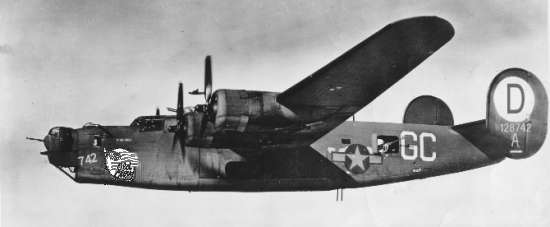
The B-24 Liberator was the aircraft that carried Richard F. Hanson and his crew into combat over Nazi-occupied Europe. It was one of the most produced heavy bombers in history and played a crucial role in the Allied strategic bombing campaign.
Aircraft Specifications
Manufacturer
Consolidated Aircraft
Wingspan
110 feet
Length
67 feet 2 inches
Max Speed
290 mph
Range
2,100 miles
Service Ceiling
28,000 feet
Bomb Load
8,000 lbs
Crew
10 men
A Legend of the Air War
The Consolidated B-24 Liberator was an American heavy bomber designed by Consolidated Aircraft of San Diego, California. With over 18,400 units produced, it holds the distinction of being the most-produced heavy bomber in history, as well as the most-produced American military aircraft of World War II.
The B-24 was used in every theater of operations during the war. Its high-mounted Davis wing gave it exceptional range and fuel efficiency, making it ideal for long-range strategic bombing missions over Europe and the vast distances of the Pacific theater.
Crew Positions
Pilot
Co-Pilot
Navigator
Bombardier
Radio Operator
Top Turret Gunner
Ball Turret Gunner
Two Waist Gunners
Tail Gunner
Richard's Position: As the Radio Operator, Richard was stationed in the radio compartment just behind the bomb bay. His duties included maintaining communication with base and other aircraft and operating radio navigation equipment.
In Richard's Own Words
"I really think our B-24's are wonderful ships but the 17's are also doing a good job and I sure don't think they will become extinct for a long time. The only thing that makes us mad is that the Forts get all the publicity in the news." — Letter home, February 24, 1944 (after 13 missions)
"We sure have a good pilot. At Boise we went up with pilots who were just learning to fly big ships and they set them down quite hard usually, but our pilot lands a B-24 as lightly as a small plane. You can hardly feel it hit." — Letter home, July 14, 1943 (during crew training)
"The windshield around the Pilot's compartment when we first started combat flying was made of what is known as plexiglass — highly transparent, but a long ways off from being bullet proof. Later in the war that glass was replaced by bulletproof glass. The first mission we flew with a bulletproof windshield, a piece of Flak struck it, right in front of the pilot's face. It took a little chip out of it, but never penetrated it." — Post-war reflections on combat
"At times when we neared our target, Flak as a rule was very accurate and plentiful. At times it sounded as hail on a tin roof." — Post-war reflections on combat
The 445th Bomb Group
Richard served with the 702nd Squadron of the 445th Bomb Group, based at RAF Tibenham in Norfolk, England. The 445th was part of the 2nd Combat Bombardment Wing of the Eighth Air Force.
The group flew its first combat mission on December 13, 1943, and would go on to fly 280 missions before the end of the war. The 445th suffered one of the worst single-mission losses in Eighth Air Force history on September 27, 1944, when 25 of 37 aircraft were shot down during a mission to Kassel, Germany.
Armament
The B-24 was defended by ten .50 caliber M2 Browning machine guns positioned throughout the aircraft. The top turret, ball turret, tail turret, and waist positions provided overlapping fields of fire to defend against enemy fighters attacking from any direction.
Despite this formidable defensive armament, B-24 crews faced tremendous danger from both enemy fighters and anti-aircraft fire (flak). The aircraft's fuel tanks and hydraulic systems were particularly vulnerable, and a single well-placed hit could prove catastrophic.